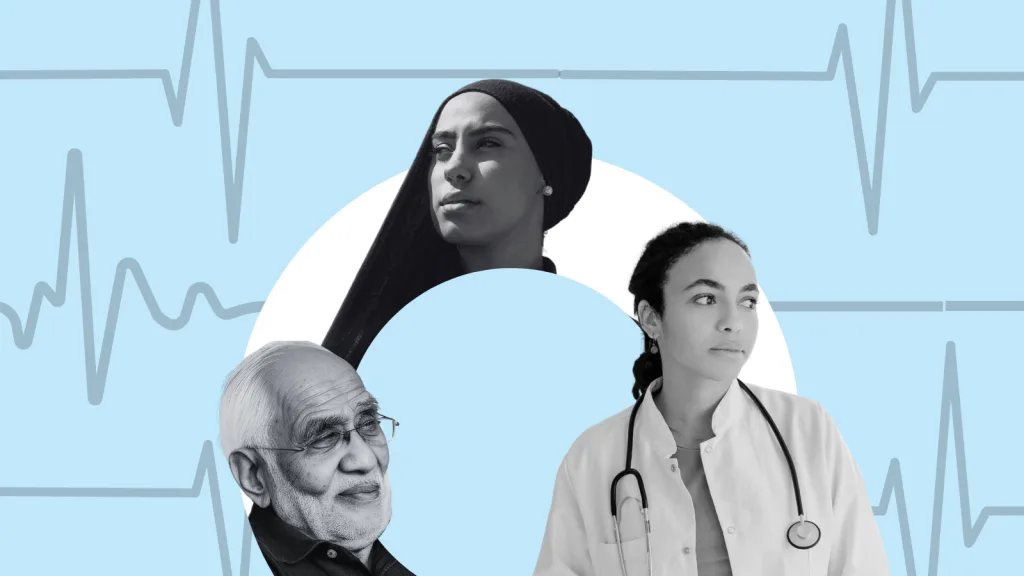
Researching family and wellness and building community capacity
Building Understanding
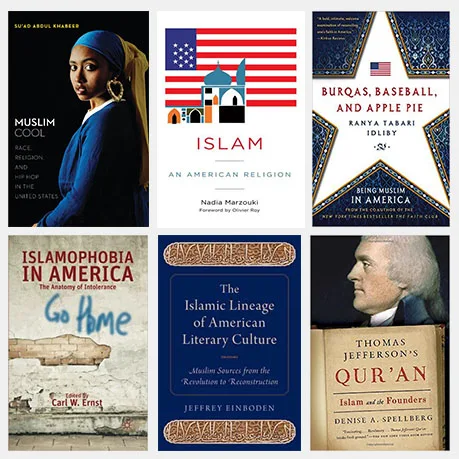
Protecting American pluralism and quantifying Muslim contributions
Providing Thought Leadership
Offering platforms for discussion and informing national conversations
How We Create Impact
Discover
We conduct rigorous, objective research on issues impacting American Muslims using a variety of methods.
Educate
We translate research into accessible resources, toolkits, and educational materials for diverse audiences.
Equip
Our strategy of equipping leaders multiplies our impact as the data lives on in the work of those who catalyze change.
ISPU in the News
From national outlets to local reporting, journalists rely on ISPU research and experts to inform stories about Muslim communities in the United States.
I remember the first time I learned ISPU’s facts and data about American Muslims and anti-Muslim discrimination, and the impact it had on my own understanding of the ways that anti-Muslim bigotry shows up in our country. It completely shifted my paradigm of what it means to love my Muslim neighbors from one of charity to mutual solidarity. It helped me to see the role that I have to play from where I’m situated, understanding that my own sense of freedom and dignity is tied to that of my Muslim neighbors.
- Becca Tyvoll, Partnerships and Program Coordinator, Shoulder to Shoulder Campaign
ISPU provides objective research and education about American Muslims to support well-informed dialogue and decision-making. This work is made possible in part through the support of generous individuals.
Moustafa Bayoumi is the author of the critically acclaimed How Does It Feel To Be a Problem?: Being Young and Arab in America (Penguin), which won an American
Dr. Alisa Perkins earned her doctoral degree in anthropology at the University of Texas at Austin. She serves as Associate Professor of comparative religion at Western Michigan University.
Rania Awaad, MD, is a clinical associate professor of psychiatry at the Stanford University School of Medicine where she is the chief of the Diversity Section, director of
Halima Al-Khattab is an experienced health behavior researcher and community leader with a demonstrated history of working in academic, clinical, and community settings. Al-Khattab is skilled in nonprofit
Hatem Bazian is a co-founder and professor of Islamic law and theology at Zaytuna College, the first accredited Muslim liberal arts college in the United States. In addition,
Dalia Mogahed is a scholar at the Institute for Social Policy and Understanding. Mogahed is the former Director of Research at ISPU, where she led the organization’s pioneering
Hadia Mubarak is an Assistant Professor of Religion at Queens University of Charlotte. She previously served as Assistant Professor of Religious Studies at Guilford College and as a
Youssef Chouhoud is an assistant professor of political science at Christopher Newport University, where he is affiliated with the Reiff Center for Human Rights and Conflict Resolution. Youssef
Carey Shenkman is an attorney, litigator, and author specializing in human rights and Constitutional law. He works with numerous organizations, including ISPU, CAIR, the Center for Constitutional Rights
Dr. Julie Macfarlane is Distinguished Professor and Professor of Law at the Faculty of Law of the University of Windsor. She has received a number of professional honours
Precious Rasheeda Muhammad, a.k.a. “The History Detective,” is an independent scholar, author, lecturer, and researcher widely recognized for her original research contributions to the study of Islam in
Dr. Hassan Abbas is Distinguished Professor of International Relations at the Near East South Asia Strategic Studies Centre (NESA), National Defense University in Washington DC. He serves as
Dr. Sohad Murrar is a professor in the Department of Psychology at the University of Illinois Chicago. She received her PhD (2018) and her MS (2014) in Psychology
Hamada Hamid Altalib is a Senior Fellow and former Director for the Center for Global Health at ISPU. He is also an Assistant Professor in the Departments of
Brennan McDaniel is a PhD student in the Department of American Studies at Yale University. Drawing from Native American studies, Islamic studies, postcolonialism, and psychoanalysis, his research concentrates
Louise Cainkar is a sociologist and Associate Professor of Social Welfare and Justice at Marquette University in Milwaukee. She currently serves as president of the Arab American Studies
What Can You Do?
ISPU is a nonprofit organization that relies on the generosity of individual donors to keep our research free and accessible to everyone who needs it. You can help us keep it that way.
ISPU is a nonprofit organization that relies on the generosity of individual donors to keep our research free and accessible to everyone who needs it. You can help us keep it that way.
This report explores the landscape of teacher compensation, position vacancies, and teacher retention in full-time Islamic schools in the United States. It aims to